oracle 1Z0-149 Exam Questions
Questions for the 1Z0-149 were updated on : Feb 18 ,2026
Page 1 out of 5. Viewing questions 1-15 out of 65
Question 1
Which two are true about using the ACCESSIBLE BY clause? (Choose two.)
- A. It can be used in the declaration of object types.
- B. It must be specified in the heading of a package specification.
- C. The check is enforced by this clause for direct access and access through dynamic SQL.
- D. It can be used for individual procedures and functions declared in a package specification.
- E. It must be specified in the heading of a package body.
Answer:
A, D
Explanation:
https://docs.oracle.com/database/122/LNPLS/ACCESSIBLE-BY-clause.htm
Question 2
Which two are valid MODIFIER values for the PLSQL_WARNINGS parameter? (Choose two.)
- A. DISABLE
- B. ENABLE
- C. ERROR
- D. ALL
- E. SEVERE
Answer:
D, E
Question 3
Examine these statements which execute successfully:
Which anonymous block executes successfully?
A.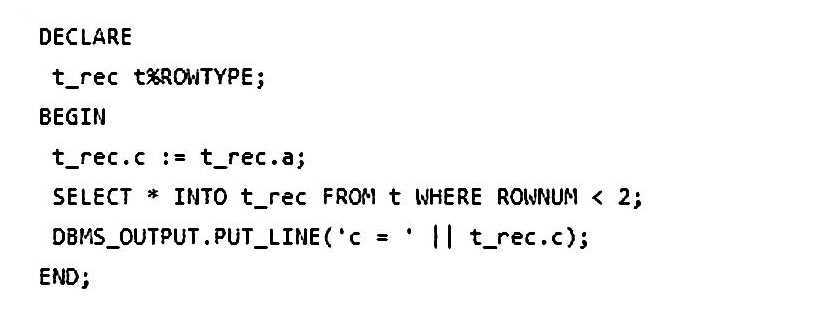
B.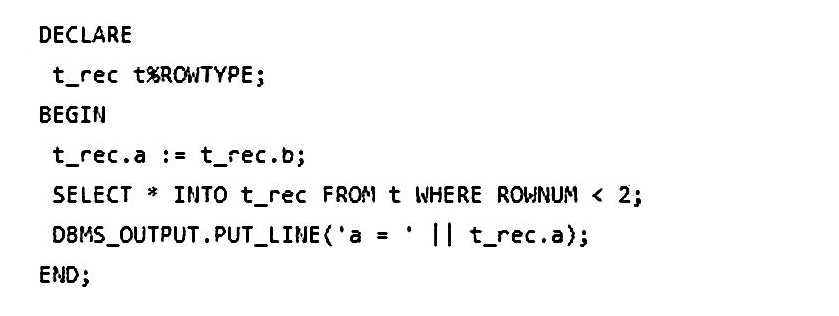
C.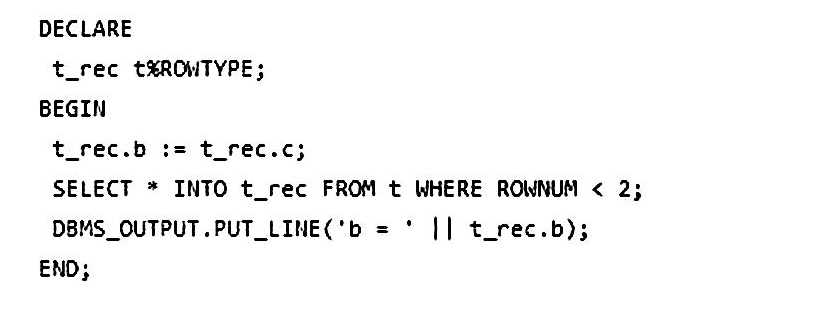
D.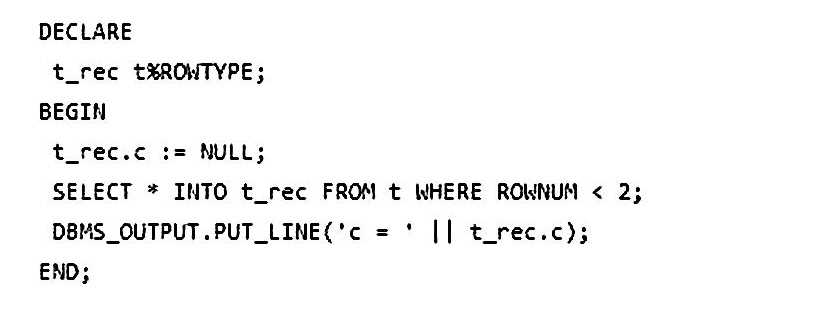
Answer:
B
Question 4
Examine these statements and output: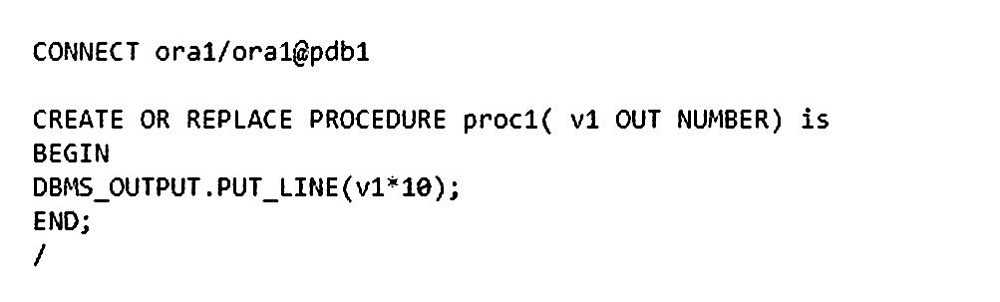
The procedure is created successfully.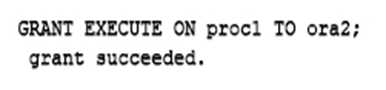
User ora2 has password ora2 in pdb1.
Which script will execute successfully?
A.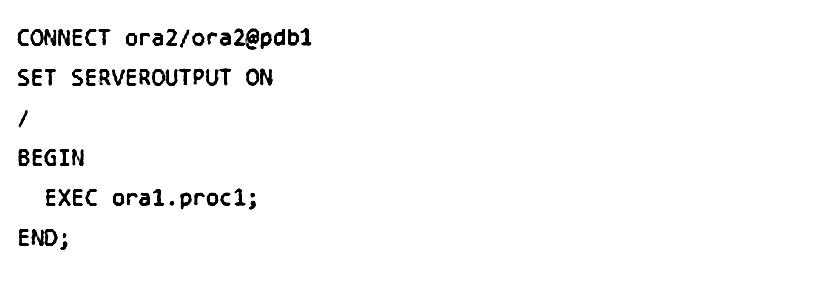
B.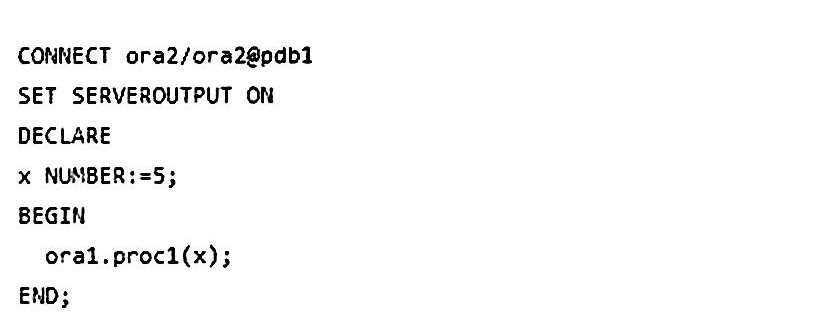
C.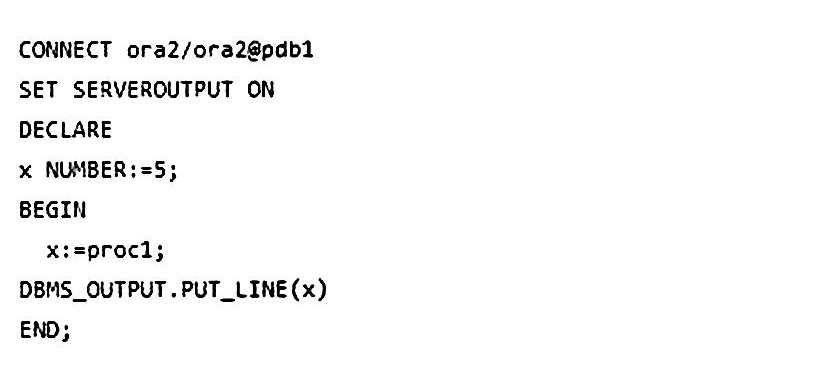
D.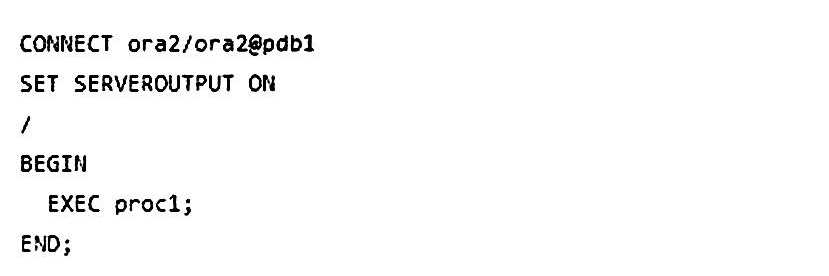
Answer:
B
Question 5
SERVEROUTPUT is enabled.
Which code block will display the values from 1 to 10 in descending order?
A.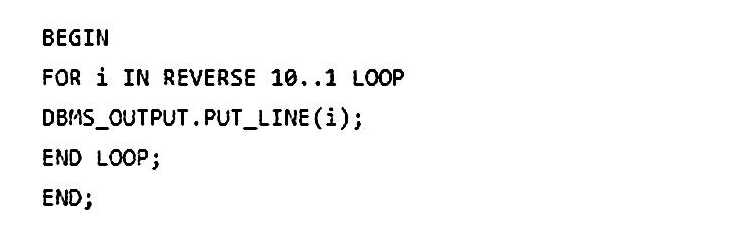
B.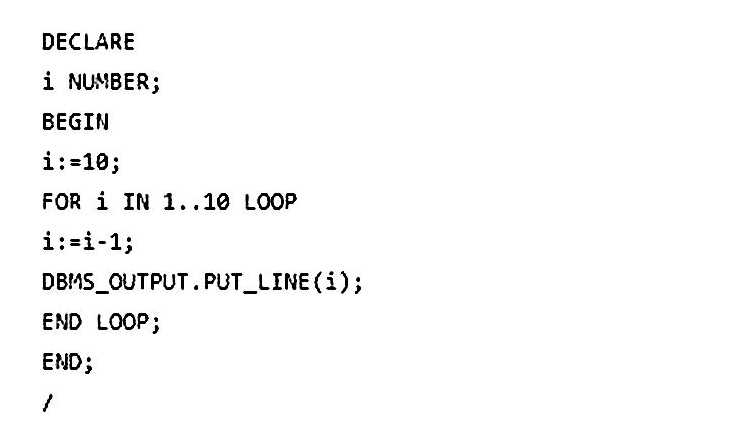
C.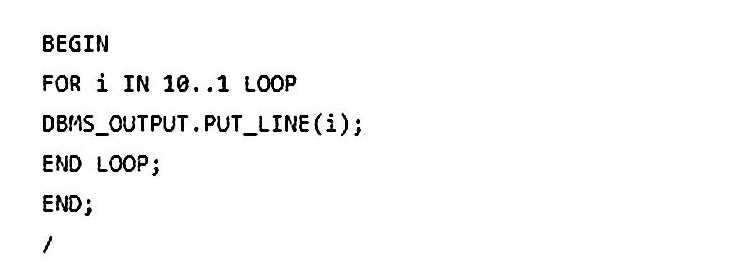
D.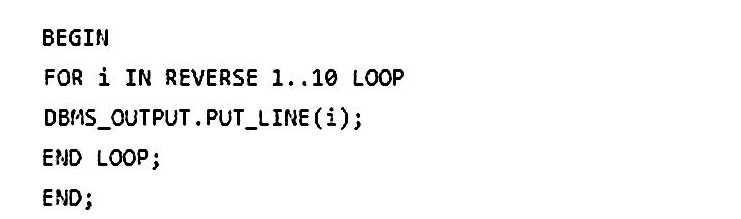
Answer:
D
Question 6
Examine these statements issued by user SH which execute successfully: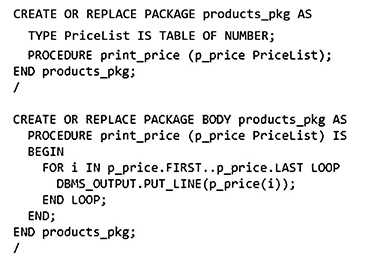
DBMS_OUTPUT.PUT_LINE(p_price(i)); END LOOP; END; END products_pkg; /
Now, examine this anonymous block executed by SH: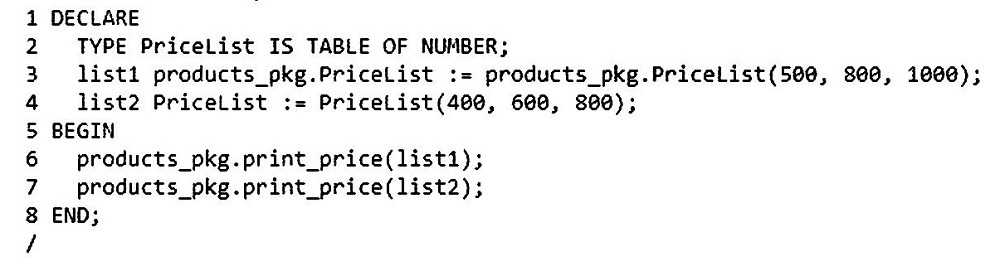
Which is true about the anonymous block?
- A. It will execute successfully only if PriceList is removed from the DECLARE section and defined as a standalone collection type.
- B. It will execute successfully only if PriceList is defined as an associative array in the package and anonymous block.
- C. It will fail at lines 6 and 7.
- D. It will fail only at line 7.
Answer:
D
Question 7
Examine these statements from a block of code: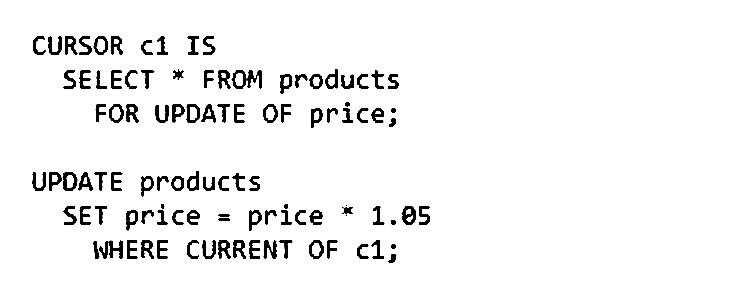
Which two are true? (Choose two.)
- A. The lock acquired when executing the OPEN c1 command will be released only after a COMMIT or ROLLBACK statement is issued.
- B. Only the PRICE column can be updated in the PRODUCTS table.
- C. The FOR UPDATE OF clause can be used only if the WHERE CURRENT OF clause is used in the executable part of the block.
- D. The WHERE CURRENT OF clause can be used only if the FOR UPDATE clause is used in the cursor definition.
- E. An OPEN c1 command will acquire a lock only on the PRICE column in the PRODUCTS table.
Answer:
A, D
Question 8
Which block of code displays the error message “Incorrect price value”?
A.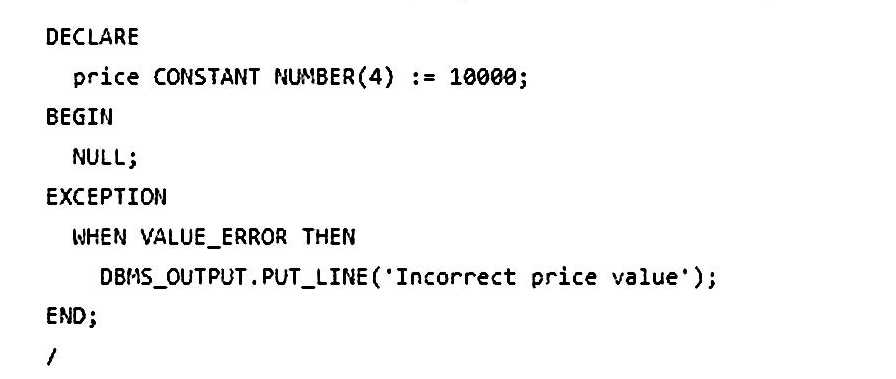
B.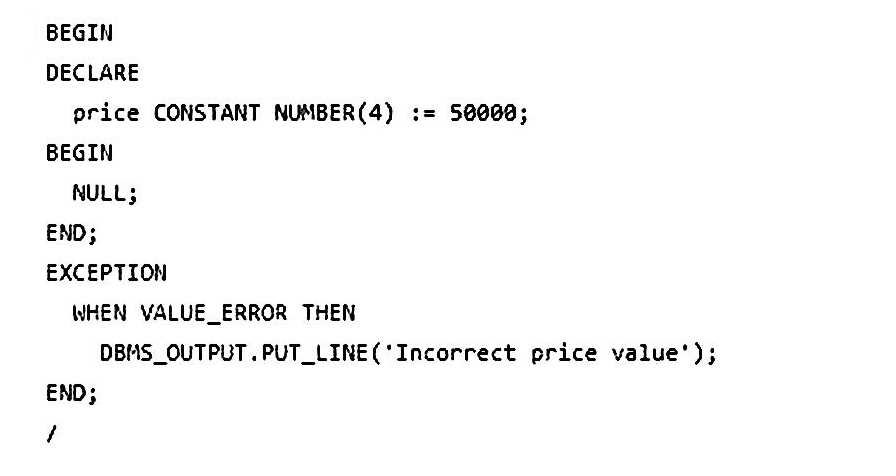
C.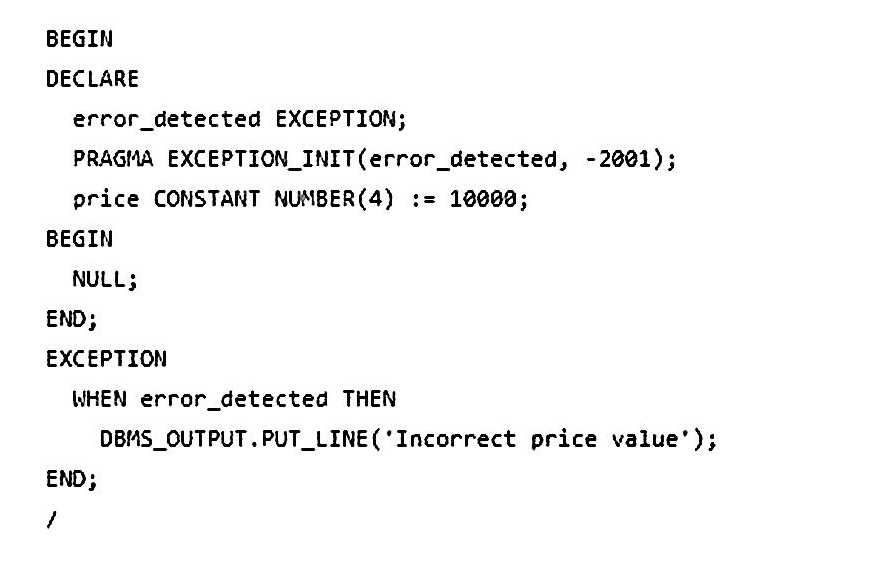
D.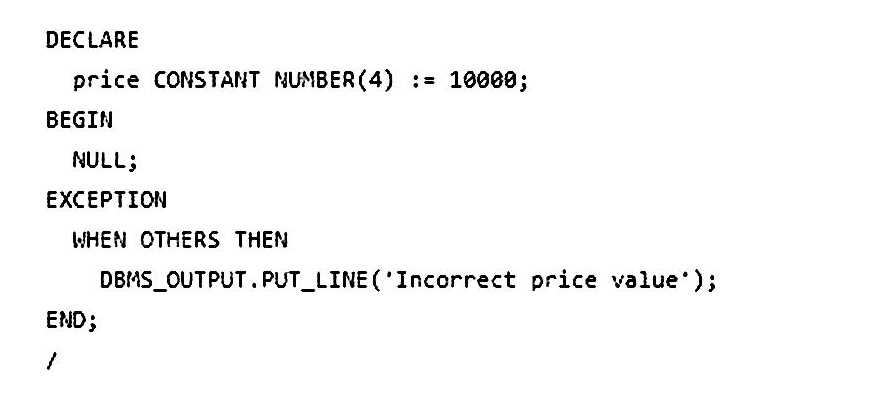
Answer:
B
Question 9
Examine this code:
What will be the outcome?
- A. It will execute successfully and will display the user-defined error message.
- B. It will result in an error as the range of the error code can only be from “-20000 to -20999.”
- C. It will result in an error as the range of the error code can only be from “-1000 to -2000.”
- D. It will result in an error as the range of the error code can only be from “-2000 to -2999."
Answer:
B
Question 10
Which three are true regarding code based access control (CBAC)? (Choose three.)
- A. In a multitenant environment, the DELEGATE option of CBAC cannot be used.
- B. CBAC roles can be granted to a program unit only if they are directly granted to its owner.
- C. CBAC roles can be granted to a program unit only if they are the predefined roles automatically defined by the standard scripts as part of database creation.
- D. You can use CBAC to attach database roles to a PL/SQL function or procedure only.
- E. In CBAC, the ADMIN and DELEGATE options cannot both be granted to the same user.
- F. You can use CBAC to attach database roles to a PL/SQL function, procedure, or package.
- G. CBAC cannot be used to secure definer's rights.
Answer:
B, E, F
Question 11
Which two are true about lexical units? (Choose two.)
- A. Character literals are case-sensitive.
- B. Spaces can be embedded in delimiters.
- C. Identifiers include labels.
- D. A character literal with zero characters has the BOOLEAN value NULL.
- E. All user-defined identifiers must start with an alphabet.
Answer:
A, E
Question 12
Examine this statement which executes successfully:
SQL> SET SERVEROUTPUT ON;
Now, examine this code which is executed: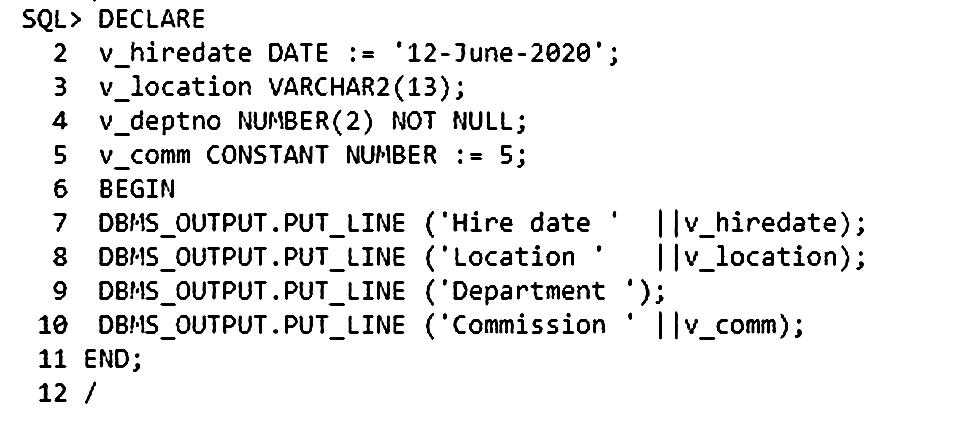
What is true about the result?
- A. It returns an error in line 2.
- B. It returns an error in line 4.
- C. It returns an error in line 9.
- D. It executes and displays output.
Answer:
B
Question 13
Which two statements are true about the RETURNING clause when used with DML? (Choose two.)
- A. When using the RETURNING INTO clause, the data returned can be only single column or expression.
- B. The RETURNING INTO clause and bulk binds may not be used together.
- C. The RETURNING INTO clause can be used with DML that affects multiple rows, if the BULK COLLECT clause is used.
- D. The RETURNING INTO clause returns column values for rows affected by DML statements.
- E. The RETURNING clause can be used for remote or parallel deletes.
Answer:
C, E
Question 14
Which two are true about packages? (Choose two.)
- A. Variables and cursors defined in a package specification are visible to all subprograms in the same schema that has the package.
- B. Modifications to a packaged procedure's body automatically cause recompilation of subprograms that invoke the procedure.
- C. Package specifications can be compiled without their bodies.
- D. Standalone subprograms that reference a package can be compiled only after both the package specification and body are compiled.
- E. A package definition must have a specification and body.
Answer:
A, C
Question 15
Which three are true about the procedure overloading feature? (Choose three.)
- A. Each procedure can be a nested subprogram.
- B. Each procedure's formal parameters can differ in data type or name.
- C. Each procedure must use named notation to specify the corresponding actual parameters.
- D. Each procedure's formal parameters must differ in name.
- E. Each procedure can be a packaged subprogram.
- F. Each procedure must use positional notation to specify the corresponding actual parameters.
- G. Each procedure can be a standalone subprogram.
Answer:
B, E, F